

What is PLWS?
| A system that establishes a close link between wages and productivity to enhance competitiveness. | |
| Allowing employees to enjoy their proper share of productivity and improving the quality of life of employees | |
| Provide benefits to employees and employers. |
As of today:
106087
Employers have implemented PLWS
7002969
Employees have enjoyed PLWS benefits
These figures have shown that many employers have been interested in implementing PLWS. Productivity is one of the main factors and influences for the country’s economic growth and the standard of living for its people. Therefore, the increase in productivity is strategically a key in enhancing the country’s economic competitiveness while at the same time helping companies to improve their performance and profitability. Realising the importance of enhancing productivity of companies and our country, the government through the Department of Industrial Relations Malaysia has introduced PLWS and is actively promoting PLWS.
Why PLWS?
01
Establishes a closer link between wages and productivity so as to enhance competitiveness
02
Ensure that wage increase commensurate with higher productivity growth
Benefits of PLWS
01 |
The payment of wages will be adjusted according to economic performance and this will alleviate the negative impacts on employers and employees. |
02 |
Ensuring employment stability and reducing the probability of retrenchment during an economic slowdown. |
03 |
Creating a win-win situation for both parties. |
04 |
Enabling companies to adjust their policies according to the current economic situation. |
05 |
Improving job specialization according to skill and enhancing the career of employees. |
06 |
Improving employees’ motivation and job satisfaction. |
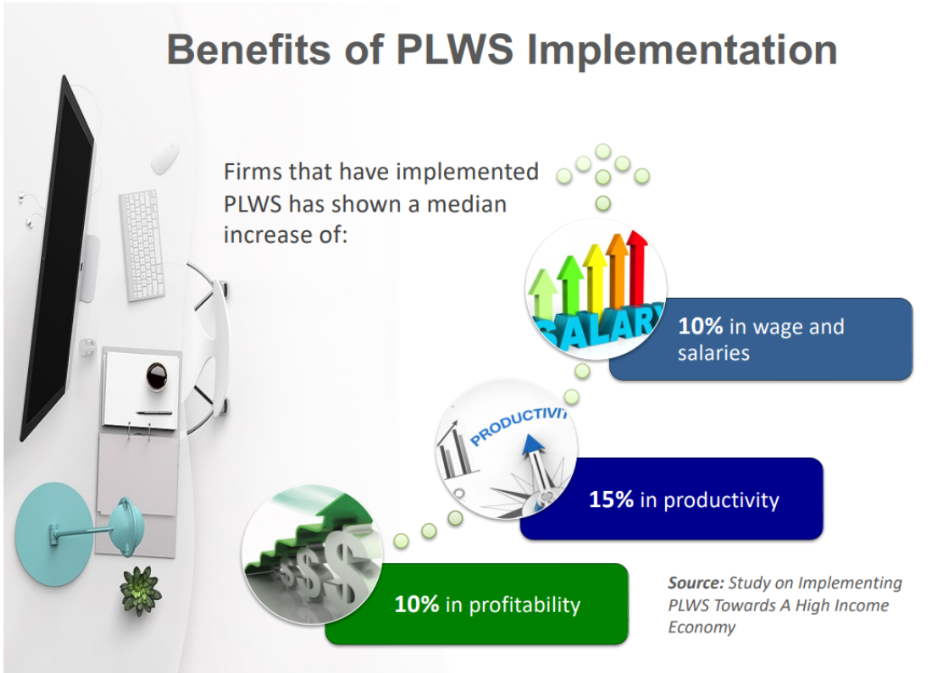
Benefits of PLWS Implementation
Components Of PLWS
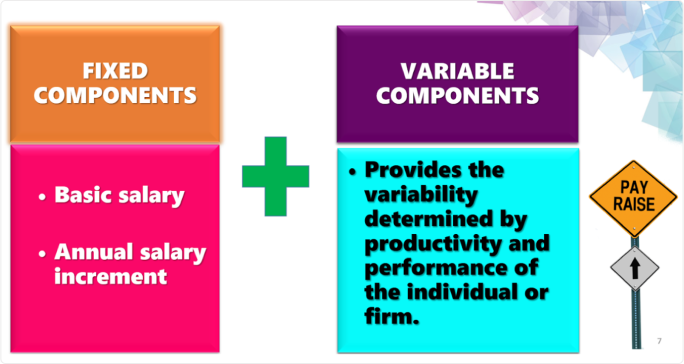
PLWS components consist of a fixed component and a variable component:
Fixed Components
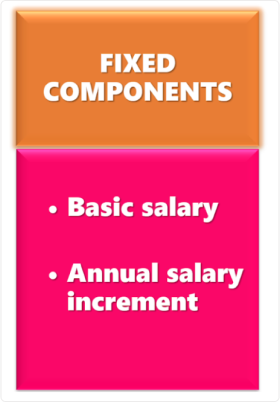
It comprises basic wage and annual increment. This will provide for income stability, acts as an indicator of the job value, reflects the cost of living and is adjusted accordingly through the annual increment. However, the annual increment should only form a small portion of the wage bill to meet the rising cost of living.
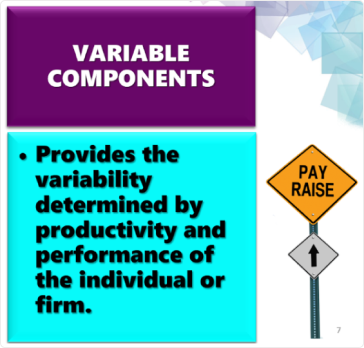
Variable Components
The variable component may be determined by linking it to productivity and performance of the individual and an organization. It is associated with a specified performance measurement indicator at the company level.
Variable Components Consist Of:
1. Performance Incentives for Companies Or Individuals
- Productivity improvement
- Key performance indicators
- Production target
- Non-financial measurements such as customer satisfaction and service quality
2. Productivity Performance Incentives
- Added value for every employee
- Sales value for each employee
- Target individual/group
- Reduction in total damage
3. Profitability Bonus
- Profit before tax
- Profit after tax
- Return on sales
- Return on equity (ROE)
- Return on investment (ROI)
- Gross operating profit
- Profit before interest and tax (PBIT)
4. Merit-Based Improvement
- Based on work functions
- Based on performance evaluation
- Target achievement performance indicators
5. Team Incentives
- Incentives based on team performance
6. Commitment Incentives
- Punctuality
- Absenteeism
- Full attendance
- Medical leave
- Disciplinary
7. Skill Incentives or Allowances
- Multitasking
- Multiskilling
- Skill certification
8. Service Incentives
- Based on department like maintenance, receptionist, etc
- Group or individual performance
9. Changing Performance-Based Bonuses
- Bonuses based on key performance indicators and individual performance
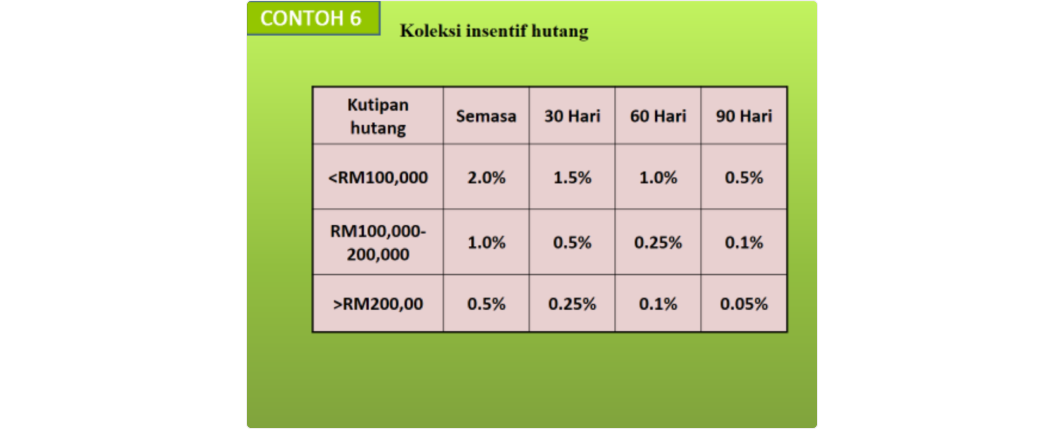
10. Debt Incentives Collection
- Incentives based on duration of collection
11. Performance-Based Allowances Or Incentives
- Incentives based on sales target achievement
12. Sales Incentives
- Incentives based on sales target achievement
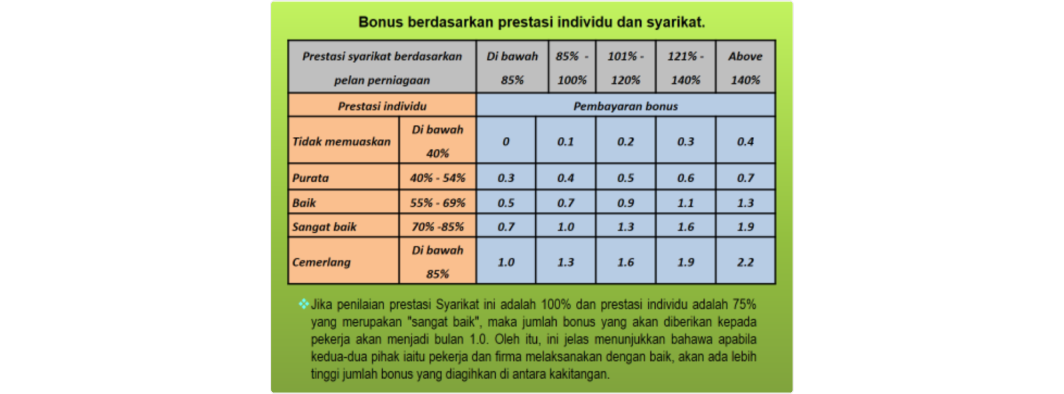
13. Bonus Based on Company and Individual Performance
- Bonus based on business plan and individual performance
- Profit before interest and tax (PBIT) and individual performance
- Individual performance and profit
14. Raise Based on Return on Investment
- The raise is based on the return on investment and individual performance
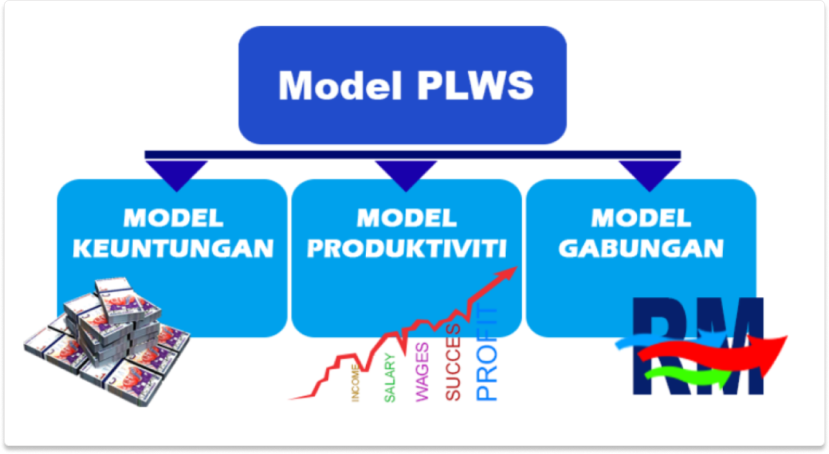
PLWS Model
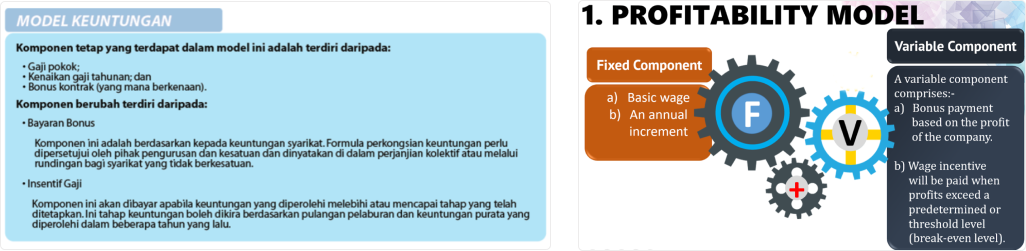
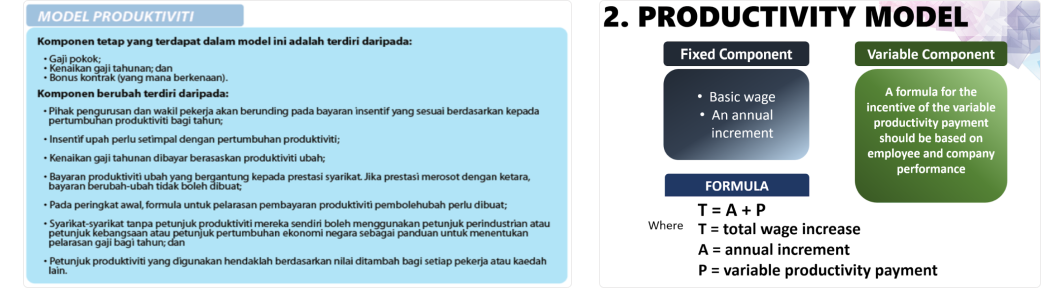
There are THREE basic PLWS models for companies to adapt and adopt. Each model must contain fixed components and variable components. The fixed component consists of base salary and salary increase benefits. The variable component consists of salary increases for the year based on productivity or profit sharing formula.
Companies can choose any model that suits their needs to improve the performance of employees and the company.
Profitability Model
Productivity Model
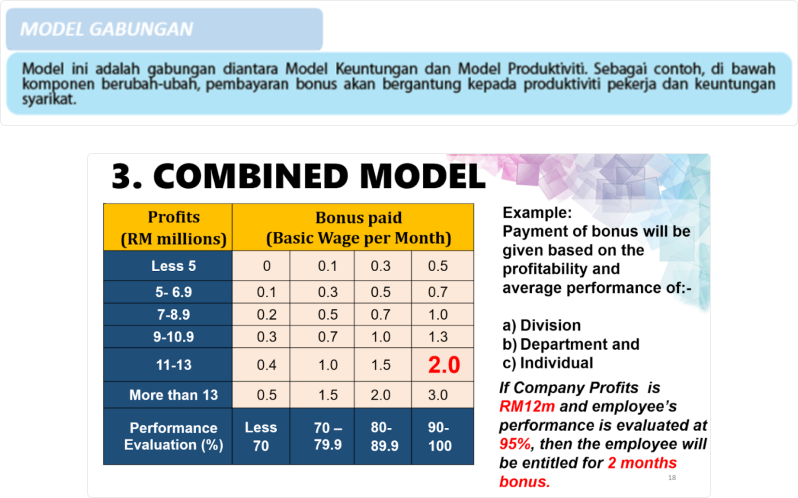
Combined Model (Mixed)
PLWS Elements
| # | Element | Description |
|---|
PLWS Elements
Example 1: Performance and Productivity Incentives
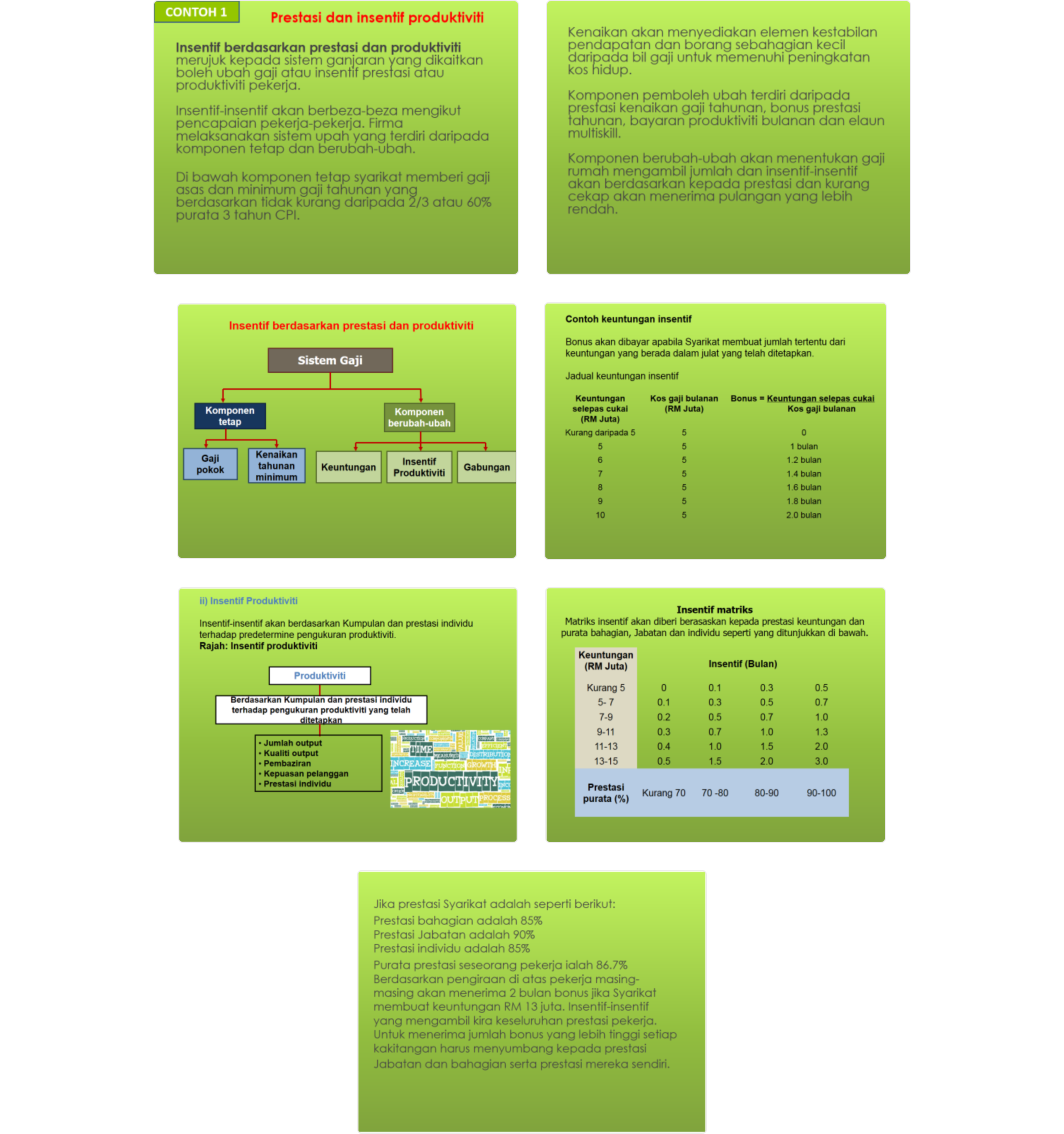
Example 2 : Profitability Bonus

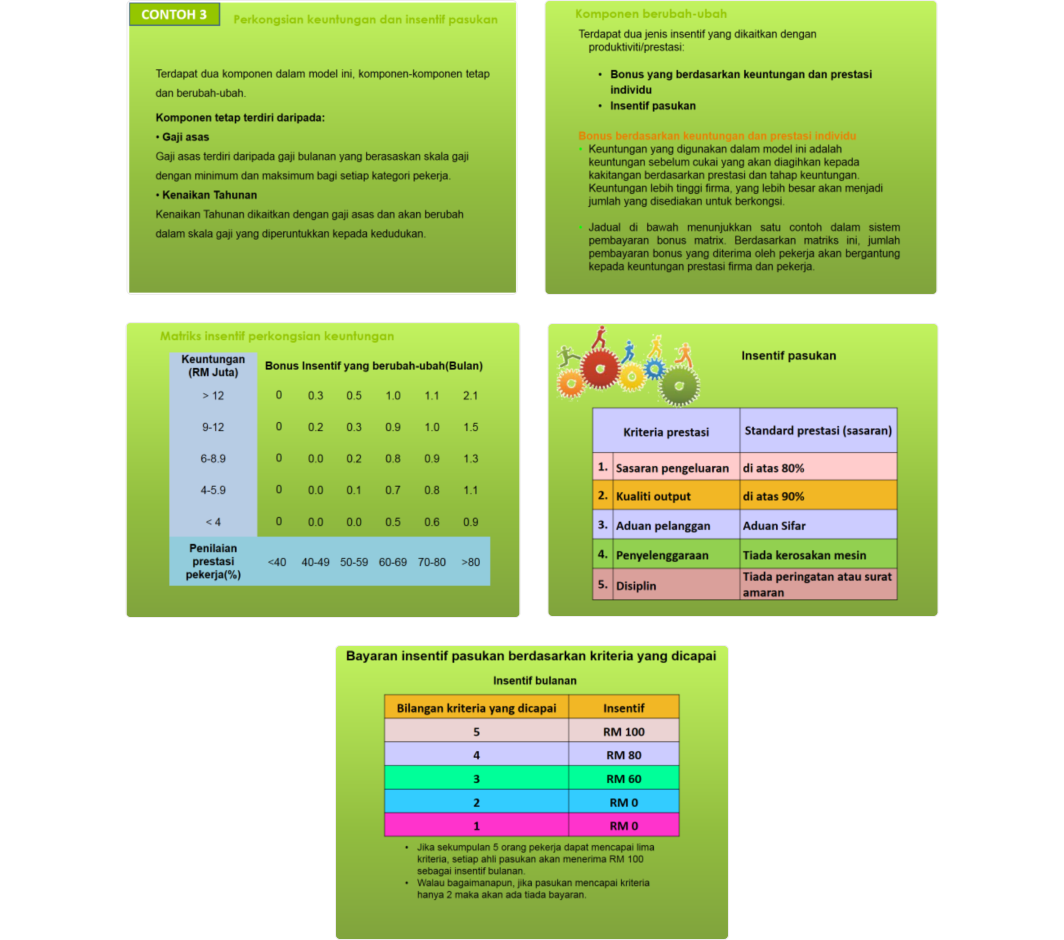
Example 3 : Profit Sharing And Team Incentives
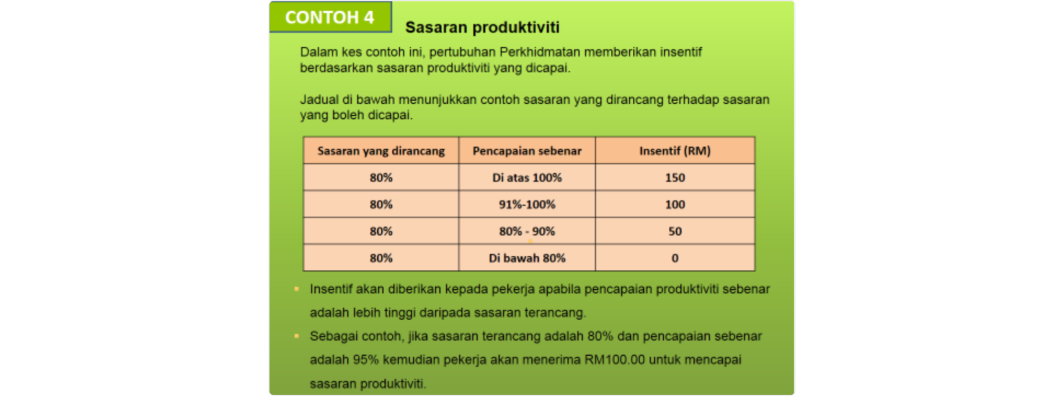
Example 4 : Productivity Target
Example 5 : Bonus Based On Company And Individual
Example 6 : Debt Incentives Collection
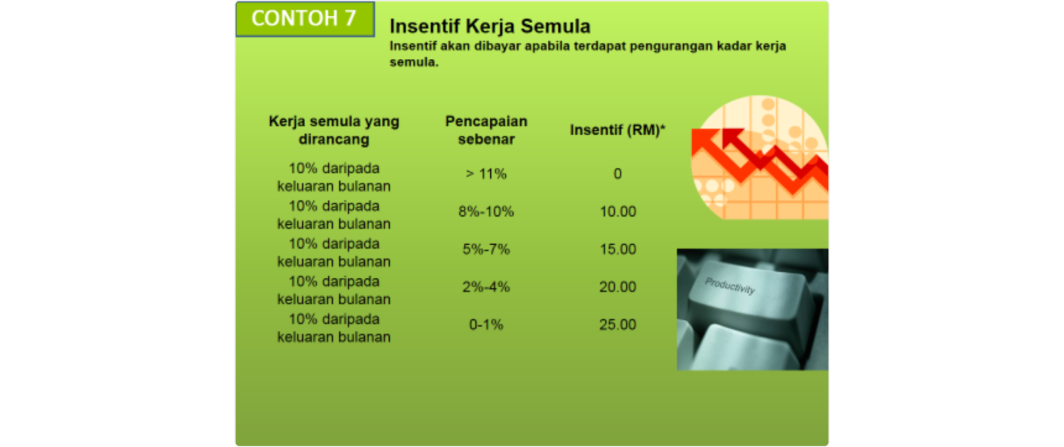
Example 7 : Rework Incentives
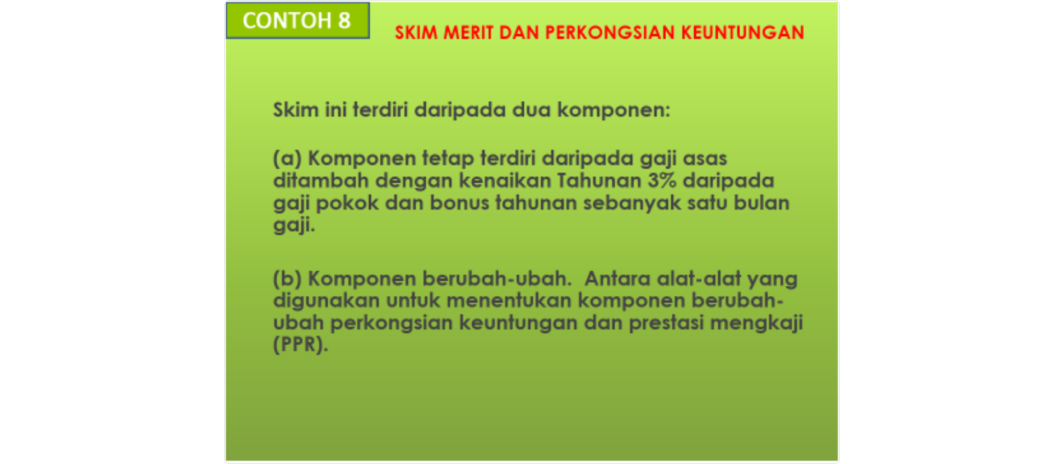
Example 8 : Merit And Profit-Sharing Schemes
Example 9 : Performance Incentives Allowance
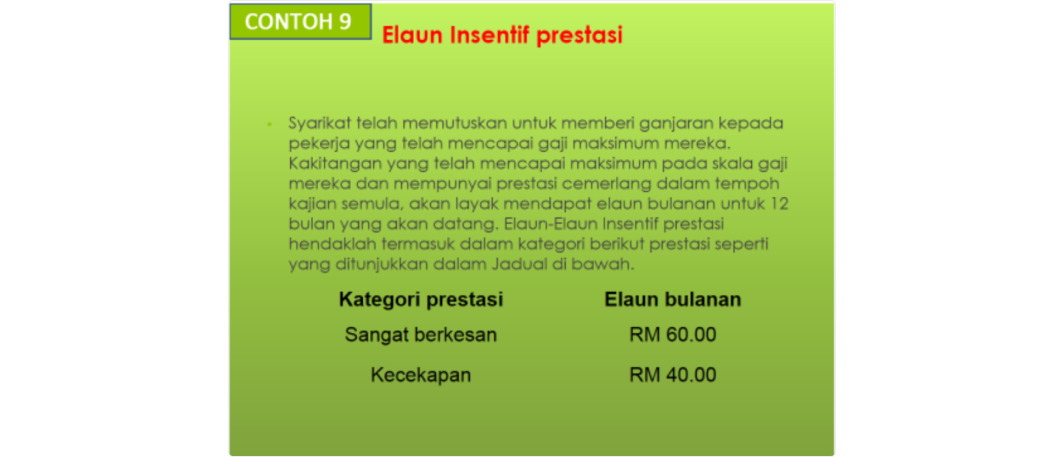
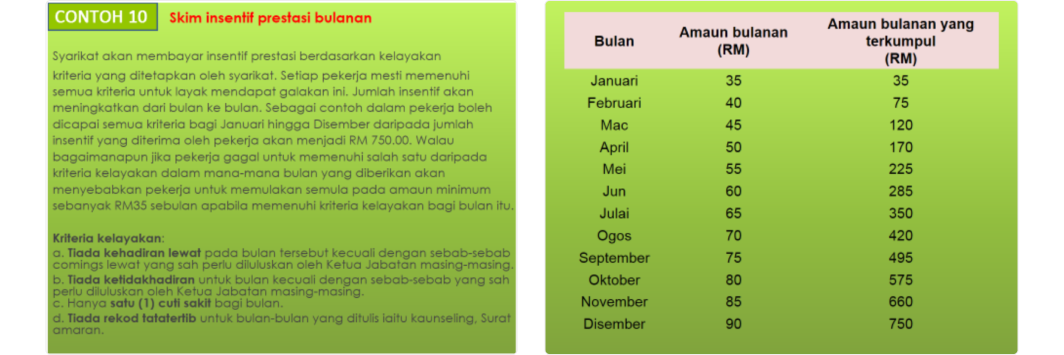
Example 10 : Monthly Performance Incentive Scheme